Active And Passive Listening: Complete Guide To Mastering Both Communication Styles
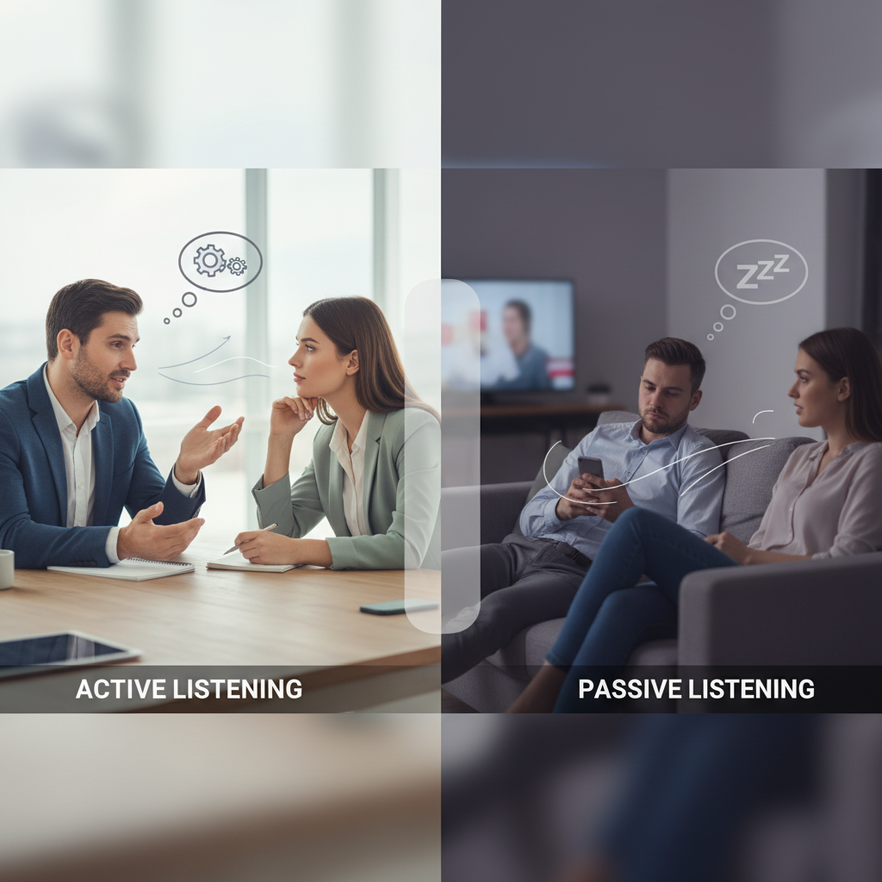
Understanding the difference between active and passive listening is crucial for anyone looking to improve their communication skills. Whether you're navigating professional relationships, personal conversations, or educational settings, knowing when and how to employ each listening style can dramatically enhance your effectiveness as a communicator. This comprehensive guide explores both approaches, their applications, and how to master each technique.
What Is Active and Passive Listening?
At its core, active and passive listening represent two distinct approaches to receiving and processing information from others. These listening styles differ fundamentally in their level of engagement, response patterns, and cognitive involvement.
Defining Active Listening
Active listening is an intentional, focused process where the listener consciously engages with the speaker through verbal and non-verbal cues. It requires mental effort, empathy, and deliberate attention to fully understand not just the words being spoken, but also the emotions, intentions, and context behind them. Active listeners demonstrate their engagement through eye contact, nodding, asking clarifying questions, and providing thoughtful responses that show comprehension.
This communication approach involves processing information in real-time while simultaneously preparing appropriate responses. Active listening creates a two-way dialogue where both parties feel heard, valued, and understood. It's characterized by the listener's ability to paraphrase, reflect, and validate what the speaker has communicated.
Defining Passive Listening
Passive listening, conversely, is a one-way communication process where the receiver absorbs information without providing immediate feedback or demonstrating overt engagement. The listener hears the words being spoken but doesn't necessarily interact with or respond to the speaker in meaningful ways. This doesn't mean passive listening is inherently negative it simply serves different purposes in various contexts.
During passive listening, the receiver may or may not fully understand or retain the sender's message. There's minimal visible engagement, limited questioning, and often no verbal confirmation that the information has been received or understood. Think of listening to a podcast while commuting or hearing background announcements in a store these are typical examples of passive listening scenarios.
Key Differences Between Active and Passive Listening
The distinction between active and passive listening extends across multiple dimensions of communication behavior and cognitive processing.
Engagement Level
The most apparent difference lies in engagement intensity. Active listening demands full mental presence and conscious participation in the conversation. The listener must focus entirely on the speaker, filtering out distractions and dedicating cognitive resources to comprehension. Passive listening requires minimal engagement the listener may be physically present but mentally elsewhere, allowing information to flow without deep processing.
Response Patterns
A key difference between active and passive listening is the response of the listener. Active listeners provide regular feedback through verbal affirmations ('I see,' 'That makes sense'), paraphrasing ('So what you're saying is...'), and asking follow-up questions to clarify or deepen understanding. Passive listeners typically remain silent, offering little to no indication that they've processed or understood the message.
Cognitive Processing
Active listening involves consciously processing and responding to information, engaging working memory, analytical thinking, and emotional intelligence simultaneously. The brain actively works to decode meaning, interpret tone, and formulate responses. Passive listening operates on a more superficial level, where information may enter auditory processing but doesn't necessarily undergo deep analysis or integration with existing knowledge.
Retention and Comprehension
Because active listening requires deeper cognitive engagement, it typically results in better information retention and comprehension. When you actively listen, you're more likely to remember details, understand context, and recall the conversation later. Passive listening often results in fragmented memory and lower retention rates since the information isn't deeply encoded in memory.
Examples of Active Listening in Practice
Understanding active and passive listening becomes clearer when examining concrete examples across different contexts.
Workplace Scenarios
During a performance review, an employee demonstrates active listening by maintaining eye contact with their manager, taking notes on feedback, and asking clarifying questions like, 'So you're saying the deadline management is the main area for improvement?' They might paraphrase key points: 'If I understand correctly, you'd like me to communicate progress updates every Friday.' This engagement shows respect and ensures mutual understanding.
Personal Relationships
When a friend shares a personal problem, active listening involves putting away your phone, facing them directly, and responding with empathetic statements such as, 'That sounds really frustrating. How did that make you feel?' Rather than immediately offering solutions, active listeners validate emotions and demonstrate genuine interest in understanding the complete experience.
Educational Settings
Students practicing active listening during lectures take notes, ask questions when concepts are unclear, and participate in discussions that demonstrate they've processed the material. They might say, 'Could you elaborate on how this theory applies to the previous example you mentioned?' This approach transforms passive information reception into engaged learning.
Healthcare Communication
Medical professionals employ active listening when they repeat patient symptoms back to confirm accuracy: 'You mentioned the pain started three days ago and is worse in the morning, correct?' This verification prevents misdiagnosis and helps patients feel heard and valued in clinical settings.
Examples of Passive Listening in Practice
While active and passive listening are often contrasted, passive listening serves legitimate purposes in many situations.
Presentations and Lectures
During large presentations or keynote speeches, audience members typically engage in passive listening. They absorb information without interrupting or offering immediate feedback. This allows speakers to deliver their message efficiently to large groups. Passive listeners in these settings might absorb critical details like key metrics or strategic directives for later reflection.
Media Consumption
Listening to music while exercising, having the television on during household chores, or hearing a podcast during your commute represents passive listening. You're receiving auditory information but not actively engaging with or analyzing every detail. This multitasking approach allows for information consumption alongside other activities.
Background Information Gathering
In meetings where you're not directly involved in the discussion but need general awareness of topics, passive listening is appropriate. You're present and hearing information without the need to immediately respond or demonstrate deep engagement with every point discussed.
When to Use Active Listening
Recognizing appropriate contexts for active and passive listening enhances communication effectiveness significantly.
Conflict Resolution
Active listening is essential when resolving disagreements or misunderstandings. By fully engaging with the other person's perspective, asking clarifying questions, and demonstrating empathy, you create space for productive dialogue and mutual understanding. This approach de-escalates tension and facilitates problem-solving.
Important Instructions or Directions
When receiving critical information safety procedures, project specifications, medical instructions, or legal guidance active listening ensures accurate comprehension. Paraphrasing back what you've heard confirms understanding and prevents costly mistakes or dangerous misunderstandings.
Building Relationships
Whether in professional networking or personal relationships, active listening demonstrates respect and genuine interest in others. It helps establish trust, rapport, and deeper connections by showing that you value what others have to say.
Learning New Skills or Complex Information
When acquiring new knowledge or developing skills, active listening accelerates learning. Engaging with instructors through questions, seeking clarification, and confirming understanding helps cement new information in long-term memory.
When to Use Passive Listening
Understanding the appropriate application of active and passive listening includes recognizing when passive listening is suitable and efficient.
General Announcements
Public address systems, general company-wide emails read aloud, or routine informational broadcasts don't typically require active engagement. Passive listening suffices for absorbing general information that doesn't demand immediate action or response.
Entertainment Purposes
When consuming media primarily for relaxation or entertainment music, podcasts, audiobooks during leisure time passive listening allows you to enjoy content without analytical pressure. This provides mental rest while still receiving information or enjoyment.
When Experiencing Information Overload
In situations with excessive information flow, passive listening can be a self-care strategy. Trying to actively listen to everything results in mental exhaustion. Strategically employing passive listening for less critical information preserves cognitive resources for what truly matters.
How to Improve Your Active Listening Skills
Developing stronger active and passive listening capabilities requires intentional practice and specific techniques.
Eliminate Distractions
Put away your phone, close your laptop, and turn off notifications when someone is speaking to you. Physical and mental distractions prevent genuine engagement. Create an environment conducive to focused attention by minimizing competing stimuli.
Use Verbal Affirmations
Simple phrases like 'I understand,' 'I see,' 'That makes sense,' or 'Tell me more' encourage the speaker and demonstrate your engagement. These verbal cues show you're processing information and invite continued sharing.
Practice Paraphrasing
Regularly summarize what you've heard in your own words: 'So what I'm hearing is...' or 'It sounds like you're saying...' This technique confirms comprehension, identifies misunderstandings early, and shows the speaker you're genuinely processing their message.
Ask Open-Ended Questions
Rather than yes-or-no questions, ask questions that encourage elaboration: 'How did that situation develop?' or 'What factors contributed to that decision?' This demonstrates interest and helps you gain deeper understanding of the topic.
Observe Nonverbal Cues
Active listening extends beyond words. Pay attention to body language, facial expressions, tone of voice, and other nonverbal signals that provide context and emotional information. These cues often communicate more than words alone.
Manage Your Internal Dialogue
Resist the urge to formulate your response while the other person is still speaking. This internal multitasking prevents genuine listening. Focus entirely on understanding first, then formulate your response after they've finished.
Practice Empathy
Try to understand the speaker's perspective, emotions, and motivations. Put yourself in their position and consider how their experiences might shape their message. Empathetic listening deepens connection and understanding.
Benefits of Mastering Both Active and Passive Listening
Proficiency in both active and passive listening styles provides significant advantages across personal and professional domains.
Enhanced Relationships
Active listening strengthens interpersonal connections by making others feel valued and understood. This emotional validation builds trust and deepens relationships in both personal and professional contexts.
Improved Problem-Solving
By fully understanding issues through active listening, you gather complete information before attempting solutions. This comprehensive understanding leads to more effective problem-solving and decision-making.
Reduced Misunderstandings
Active listening significantly decreases miscommunication by confirming understanding in real-time. This prevents costly errors, relationship damage, and time wasted on corrections.
Increased Productivity
Knowing when to employ passive listening for less critical information conserves mental energy for situations demanding active engagement. This strategic allocation of cognitive resources enhances overall productivity and prevents mental fatigue.
Professional Advancement
Strong listening skills are consistently cited as essential leadership qualities. Professionals who master both listening styles are better collaborators, more effective managers, and stronger team members, leading to career advancement opportunities.
Common Barriers to Effective Active and Passive Listening
Understanding obstacles that impede active and passive listening helps you develop strategies to overcome them.
Technological Distractions
Smartphones, computers, and constant notifications fragment attention and prevent sustained focus. These digital interruptions are among the most significant barriers to effective listening in modern contexts.
Preconceptions and Biases
When we think we already know what someone will say, we stop truly listening. Confirmation bias leads us to hear what we expect rather than what's actually being communicated.
Emotional Reactions
Strong emotional responses to certain words, topics, or speakers can trigger defensive or reactive thinking that shuts down genuine listening. Managing emotional reactions is essential for maintaining listening effectiveness.
Environmental Factors
Noise, uncomfortable temperatures, poor acoustics, or visual distractions in the physical environment can significantly impair listening ability, requiring conscious effort to maintain focus.
Cognitive Overload
Mental fatigue, stress, or attempting to process too much information simultaneously reduces listening capacity. Recognizing your cognitive limits helps you know when to request breaks or defer conversations.
Practical Exercises to Develop Active and Passive Listening Skills
Strengthening your active and passive listening abilities requires deliberate practice through targeted exercises.
Mindful Listening Practice
Set aside 10 minutes daily to practice focused listening. This could involve listening to a podcast or conversation with the sole intention of comprehending and retaining information without formulating responses or judgments. Notice when your mind wanders and gently redirect focus to the speaker.
Paraphrasing Exercises
During conversations, challenge yourself to paraphrase the speaker's main points before offering your own perspective. This forces deeper processing and confirms understanding before responding.
Question Formulation Drill
After listening to a presentation or conversation, write down three open-ended questions that demonstrate you understood the content and want to explore it more deeply. This develops the skill of engaged, curious listening.
Nonverbal Awareness Exercise
Watch videos with the sound off and try to interpret meaning solely from body language and facial expressions. Then watch with sound to check your interpretations. This develops sensitivity to nonverbal communication.
Strategic Listening Practice
Throughout your day, consciously identify which situations require active versus passive listening. Reflect on whether you allocated appropriate listening styles to different contexts and adjust as needed.
Frequently Asked Questions About Active and Passive Listening
Can you switch between active and passive listening during the same conversation?
Yes, skilled communicators frequently transition between active and passive listening based on conversation dynamics. You might passively listen during tangential portions of a discussion while actively engaging with critical information or emotional content. This flexibility allows for efficient cognitive resource allocation.
Is passive listening always bad or ineffective?
Not at all. Passive listening serves important functions in appropriate contexts. It allows for information gathering in situations that don't require immediate engagement, enables multitasking when appropriate, and conserves mental energy for situations demanding active focus. The key is matching listening style to context.
How long does it take to improve active listening skills?
Like any skill, listening improvement varies by individual and practice intensity. Most people notice meaningful improvements within 3-4 weeks of consistent, deliberate practice. However, mastering active and passive listening is a lifelong development process with continually deepening sophistication.
What if someone mistakes my passive listening for disinterest?
Context matters significantly. In one-on-one or small group settings where engagement is expected, passive listening often appears as disinterest or disrespect. In these situations, employing active listening techniques even minimal ones like nodding or brief verbal affirmations prevents misunderstandings while maintaining efficiency.
Can introverts be good active listeners?
Absolutely. In fact, many introverts excel at active listening because they're naturally inclined toward thoughtful, focused attention. Active listening doesn't require extroverted behavior it requires genuine attention, empathy, and appropriate responses, all of which introverts often provide excellently.
Conclusion: Mastering the Balance of Active and Passive Listening
Understanding and effectively applying both active and passive listening represents a crucial communication competency in our information-saturated world. While active listening builds relationships, ensures understanding, and demonstrates respect in important interactions, passive listening serves legitimate purposes in appropriate contexts, allowing for efficient information processing and cognitive resource management.
The most effective communicators aren't those who exclusively employ one style, but rather those who skillfully assess each situation and apply the appropriate listening approach. They recognize when to lean in with full engagement and when to absorb information more passively. This flexibility and situational awareness separate adequate listeners from exceptional ones.
By developing both listening styles through intentional practice, eliminating common barriers, and continuously refining your approach based on feedback and outcomes, you'll enhance your professional effectiveness, deepen personal relationships, and navigate complex communication landscapes with greater ease and success. The investment in improving your active and passive listening skills yields returns across virtually every aspect of your personal and professional life.