Active And Passive Listening: Key Differences, Examples & How To Master Both
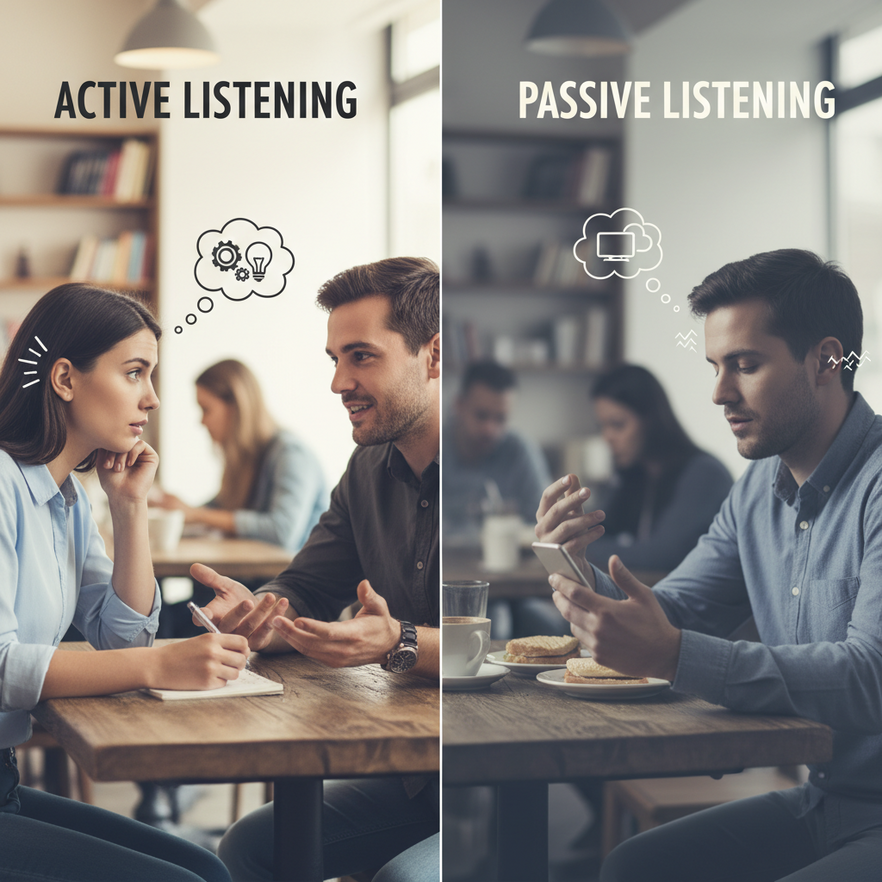
Understanding Active and Passive Listening
Communication is the cornerstone of human interaction, yet the quality of our communication often hinges on how well we listen rather than how eloquently we speak. Active and passive listening represent two fundamentally different approaches to receiving information, each with distinct characteristics, benefits, and appropriate use cases. Understanding the nuances between these listening styles can dramatically improve your personal relationships, professional success, and overall communication effectiveness.
While most people assume they're good listeners, research suggests that we retain only about 25-50% of what we hear. This statistic highlights a critical gap in how we process auditory information. The distinction between active and passive listening lies at the heart of this retention problem, and mastering both approaches can transform how you connect with others and absorb information in various contexts.
What Is Passive Listening?
Passive listening is a one-way communication process where the listener receives auditory information without actively engaging with the content or the speaker. In this listening mode, you're essentially hearing words without processing them deeply or providing meaningful feedback to demonstrate comprehension.
Key Characteristics of Passive Listening
Understanding passive listening requires recognizing its defining features. When you engage in passive listening, several telltale behaviors emerge:
- Minimal engagement: The listener doesn't ask clarifying questions or seek additional information
- Limited feedback: Responses are typically brief, such as 'uh-huh' or 'okay,' without substantive contribution
- Divided attention: Focus is split between the speaker and other activities like checking phones or working on tasks
- Reduced retention: Information recall is significantly lower because the brain isn't actively processing the content
- Absence of nonverbal cues: Body language doesn't reflect engagement, with limited eye contact or responsive facial expressions
- No clarification attempts: Misunderstandings go unaddressed because the listener doesn't verify their understanding
Examples of Passive Listening
Passive listening occurs more frequently than most people realize. Consider these common scenarios:
At home: Your partner discusses dinner plans while you scroll through social media, offering occasional mumbles of acknowledgment without truly processing their suggestions. You hear the words but couldn't accurately recall what was said five minutes later.
In meetings: During a lengthy presentation, you allow your mind to wander while appearing attentive. You catch snippets of information but miss critical details because you're mentally planning your afternoon schedule.
With background media: Playing a podcast or audiobook while performing demanding tasks means you're passively listening the content serves as background noise rather than receiving your full cognitive attention.
During lectures: Students often engage in passive listening when they're physically present but mentally disengaged, leading to poor information retention and the need to re-learn material later.
When Passive Listening Is Appropriate
Despite its limitations, passive listening has legitimate applications. It's perfectly suitable when:
- Consuming entertainment content where deep comprehension isn't necessary
- Listening to background music while working or relaxing
- Hearing routine announcements that don't require action
- Attending events where your presence matters more than detailed information retention
- Multitasking during less critical conversations or information delivery
What Is Active Listening?
Active listening represents a conscious, intentional approach to receiving and processing information. Unlike its passive counterpart, active listening demands full mental engagement, where the listener makes a deliberate effort to understand, interpret, and respond appropriately to the speaker's message both verbal and nonverbal.
This listening approach transforms communication from a one-way information transfer into a dynamic, interactive exchange. Active listeners don't just hear words; they comprehend meaning, recognize emotions, and demonstrate understanding through targeted responses and appropriate body language.
Key Characteristics of Active Listening
When you practice active listening, you exhibit several distinguishable behaviors that set you apart from passive listeners:
- Full attention: You eliminate distractions and focus entirely on the speaker, making them feel valued and heard
- Verbal acknowledgment: You provide substantive responses that demonstrate comprehension, such as paraphrasing or summarizing key points
- Follow-up questions: You ask clarifying questions to deepen understanding and show genuine interest in the topic
- Empathetic responses: You recognize and validate the speaker's emotions, connecting on a deeper level
- Positive body language: You maintain appropriate eye contact, nod at key points, lean slightly forward, and use facial expressions that reflect engagement
- Suspension of judgment: You listen to understand rather than to respond, avoiding premature conclusions or interruptions
- Mental processing: You actively connect new information with existing knowledge, creating mental frameworks for better retention
Examples of Active Listening
Active listening manifests differently across various contexts, but the underlying principles remain consistent:
In professional settings: During a client meeting, you take notes, ask clarifying questions about their needs, paraphrase their concerns to confirm understanding, and maintain eye contact throughout the conversation. You might say, 'If I understand correctly, your primary concern is project timeline flexibility. Is that accurate?'
In personal relationships: When your friend shares a difficult experience, you put your phone away, make eye contact, and respond with empathy: 'That sounds incredibly frustrating. How did that make you feel?' You're not just waiting for your turn to speak; you're genuinely seeking to understand their perspective.
In educational environments: Students practicing active listening take comprehensive notes, ask professors to clarify complex concepts, participate in discussions by building on previous points, and mentally summarize information to reinforce learning.
In healthcare: A doctor practicing active listening with a patient repeats back symptoms, asks open-ended questions about lifestyle factors, and validates the patient's concerns before offering diagnosis or treatment options.
The Key Differences Between Active and Passive Listening
While both active and passive listening involve receiving auditory information, they differ substantially in execution, outcomes, and appropriateness for different situations. Understanding these distinctions helps you choose the right listening approach for each context.
Comprehensive Comparison
| Aspect | Active Listening | Passive Listening |
|---|---|---|
| Engagement Level | High cognitive involvement with conscious processing | Low involvement with minimal mental effort |
| Response Type | Substantive feedback, questions, paraphrasing | Minimal acknowledgment or silence |
| Retention Rate | High information is processed and stored effectively | Low much information is forgotten quickly |
| Body Language | Engaged posture, eye contact, responsive expressions | Distracted appearance, limited nonverbal cues |
| Goal | Deep understanding and meaningful connection | Basic awareness or background presence |
| Relationship Impact | Strengthens connections and builds trust | Can create distance or misunderstandings |
| Learning Outcome | Effective knowledge acquisition and application | Limited learning with frequent gaps |
| Energy Required | High demands focus and mental resources | Low can be maintained with minimal effort |
The Engagement Factor
The most fundamental difference between active and passive listening lies in engagement level. Active listening requires you to consciously process information, making mental connections and evaluating what you hear. Your brain works to integrate new information with existing knowledge, creating meaningful patterns that enhance retention.
Passive listening, conversely, allows information to flow through your consciousness without significant processing. It's the mental equivalent of skimming rather than reading deeply you get a general impression but miss substantial detail.
The Response Dynamic
Another critical distinction involves how listeners respond to speakers. Active listeners provide feedback that demonstrates comprehension: they paraphrase content, ask relevant questions, and contribute meaningfully to the conversation. These responses create a dialogue rather than a monologue.
Passive listeners offer minimal response, often limited to noncommittal sounds or brief phrases. This lack of substantive feedback can leave speakers uncertain whether their message was received or understood, potentially damaging communication effectiveness and relationship quality.
Benefits of Mastering Active Listening
Developing strong active listening skills yields numerous advantages across personal and professional domains. These benefits extend far beyond simple information retention, influencing relationship quality, career success, and personal growth.
Professional Advantages
Enhanced career prospects: Employers consistently rank communication skills among the most valuable employee attributes. Active listeners excel at understanding instructions, collaborating effectively, and building strong professional relationships all factors that contribute to career advancement.
Improved leadership capabilities: Leaders who practice active listening create environments where team members feel valued and heard. This approach fosters trust, encourages open communication, and leads to more innovative problem-solving as diverse perspectives are genuinely considered.
Better conflict resolution: Active listening helps de-escalate tensions by ensuring all parties feel understood. When people believe their concerns are truly heard, they're more receptive to compromise and collaborative solutions.
Stronger client relationships: In customer-facing roles, active listening enables you to identify true needs rather than assumed ones, leading to better service delivery and higher satisfaction rates.
Personal Relationship Benefits
Deeper connections: Friends, family members, and romantic partners feel more valued when you practice active listening. This strengthens emotional bonds and creates a foundation of trust and mutual respect.
Reduced misunderstandings: By clarifying information and confirming understanding during conversations, active listeners minimize the miscommunications that often damage relationships.
Emotional intelligence development: Active listening enhances your ability to recognize and respond to others' emotions, a critical component of emotional intelligence that influences nearly every aspect of interpersonal success.
Learning and Development Benefits
Accelerated learning: Students and professionals who apply active listening techniques retain information more effectively, reducing the time needed to master new concepts or skills.
Critical thinking enhancement: The mental processing involved in active listening strengthens analytical skills as you evaluate information, identify connections, and form reasoned conclusions.
How to Develop Active Listening Skills
Transforming from a predominantly passive to an active listener requires conscious effort and consistent practice. However, the investment yields substantial returns in virtually every area of life.
Eliminate Distractions
Active listening begins with creating an environment conducive to focus. Put away electronic devices, close unnecessary browser tabs, and position yourself to minimize external interruptions. If you're in a noisy environment, consider moving to a quieter location when possible.
Mental distractions prove equally problematic. When you notice your thoughts wandering to unrelated topics, gently redirect your attention to the speaker. This mental discipline strengthens with practice, becoming more automatic over time.
Practice Mindful Presence
Mindfulness techniques support active listening by training your brain to maintain present-moment awareness. Before important conversations, take several deep breaths to center yourself and commit to being fully present for the duration of the interaction.
Notice when you start formulating your response while the other person is still speaking a common barrier to genuine active listening. Instead, commit to understanding completely before considering your reply.
Employ Verbal Active Listening Techniques
Several verbal strategies demonstrate active listening while reinforcing your understanding:
- Paraphrasing: Restate the speaker's main points in your own words: 'So what you're saying is...'
- Summarizing: Condense longer explanations to confirm understanding: 'Let me make sure I've got this right. The three main issues are...'
- Clarifying questions: Ask targeted questions to fill knowledge gaps: 'Can you help me understand what you meant by...?'
- Reflective statements: Mirror the emotional content: 'It sounds like that situation was really frustrating for you'
- Encouraging phrases: Use brief affirmations to signal engagement: 'I see,' 'That makes sense,' or 'Tell me more about that'
Master Nonverbal Communication
Your body language significantly impacts how speakers perceive your attentiveness. Key nonverbal active listening behaviors include:
- Maintaining appropriate eye contact (typically 60-70% of the conversation)
- Adopting an open posture without crossed arms or defensive positioning
- Leaning slightly toward the speaker to indicate interest
- Nodding at appropriate moments to show understanding
- Matching your facial expressions to the conversation's emotional tone
- Avoiding fidgeting or checking the time, which signals disengagement
Suspend Judgment and Practice Empathy
Active listening requires approaching conversations with curiosity rather than criticism. Resist the urge to evaluate or judge the speaker's perspective while they're still explaining it. Your goal is first to understand, then to respond.
Try to see situations from the speaker's perspective, even if you ultimately disagree. This empathetic approach doesn't require you to change your views, but it enables more productive dialogue and demonstrates respect for differing viewpoints.
When to Use Active vs. Passive Listening
Both active and passive listening serve important functions, and knowing when to deploy each approach optimizes your communication effectiveness while managing your cognitive resources efficiently.
Situations Requiring Active Listening
Deploy active listening techniques when:
- Receiving important instructions or complex information that you'll need to act upon
- Engaging in meaningful conversations with friends, family, or romantic partners
- Participating in professional meetings, negotiations, or client interactions
- Learning new skills or concepts in educational or training settings
- Resolving conflicts or addressing sensitive topics
- Building relationships with new colleagues, acquaintances, or community members
- Receiving feedback about your performance or behavior
- Supporting someone through a difficult emotional experience
Situations Where Passive Listening Suffices
Passive listening is appropriate when:
- Enjoying entertainment content like music, podcasts, or audiobooks during low-stakes activities
- Hearing background announcements in public spaces
- Attending social events where your physical presence matters more than detailed information retention
- Multitasking during routine, non-critical information delivery
- Taking brief mental breaks during extended information-heavy sessions
The key is recognizing which situations genuinely warrant passive listening versus those where you're defaulting to it out of habit despite needing active engagement.
Common Barriers to Active Listening
Even with awareness of active listening's importance, several obstacles can interfere with consistent implementation. Recognizing these barriers helps you develop strategies to overcome them.
Internal Barriers
Cognitive overload: When you're mentally exhausted or processing multiple stressors, maintaining active listening becomes significantly more challenging. Your brain has limited cognitive resources, and active listening demands a substantial allocation.
Preconceived notions: Existing beliefs about the speaker or topic can create confirmation bias, where you only hear information that supports your current perspective while dismissing contradictory points.
Emotional reactions: Strong emotional responses to certain words, topics, or delivery styles can hijack your attention, causing you to focus on your internal reaction rather than the speaker's continued message.
Rehearsing responses: The habit of planning what you'll say next while others are still speaking fundamentally undermines active listening, as your cognitive focus shifts from receiving to formulating.
External Barriers
Environmental distractions: Noise, visual interruptions, uncomfortable temperatures, or other physical factors can make maintaining focus difficult even with the best intentions.
Technology interference: Smartphones, computers, and other devices create constant temptation to divide attention, particularly when notifications arrive during conversations.
Time pressure: Feeling rushed can cause you to listen more superficially, seeking quick information extraction rather than deep understanding.
Strategies for Overcoming Barriers
Address these challenges through:
- Scheduling important conversations when you're mentally fresh rather than depleted
- Creating 'device-free zones' or times for critical interactions
- Practicing meditation or mindfulness to strengthen attention control
- Being honest when you lack capacity for active listening and requesting to continue the conversation at a better time
- Working to identify your personal triggers and developing techniques to manage emotional reactions
Conclusion: Mastering Active and Passive Listening
The distinction between active and passive listening represents far more than an academic communication concept it's a practical framework that influences the quality of your relationships, professional success, and personal development. While passive listening serves specific purposes in less critical contexts, active listening skills prove essential for meaningful communication, effective learning, and relationship building.
Developing stronger active listening capabilities requires conscious effort and consistent practice. Start by implementing one or two techniques from this guide, gradually incorporating additional strategies as they become habitual. Pay attention to how improved listening affects your relationships, work performance, and information retention.
Remember that even skilled communicators occasionally slip into passive listening, particularly during stressful periods or when fatigued. The goal isn't perfection but rather increasing your awareness of listening modes and consciously choosing the approach that best serves each situation. By understanding when and how to apply active and passive listening, you'll dramatically enhance your communication effectiveness and strengthen connections across all areas of life.