Revolutionize Loan Servicing: AI Agents For Automation
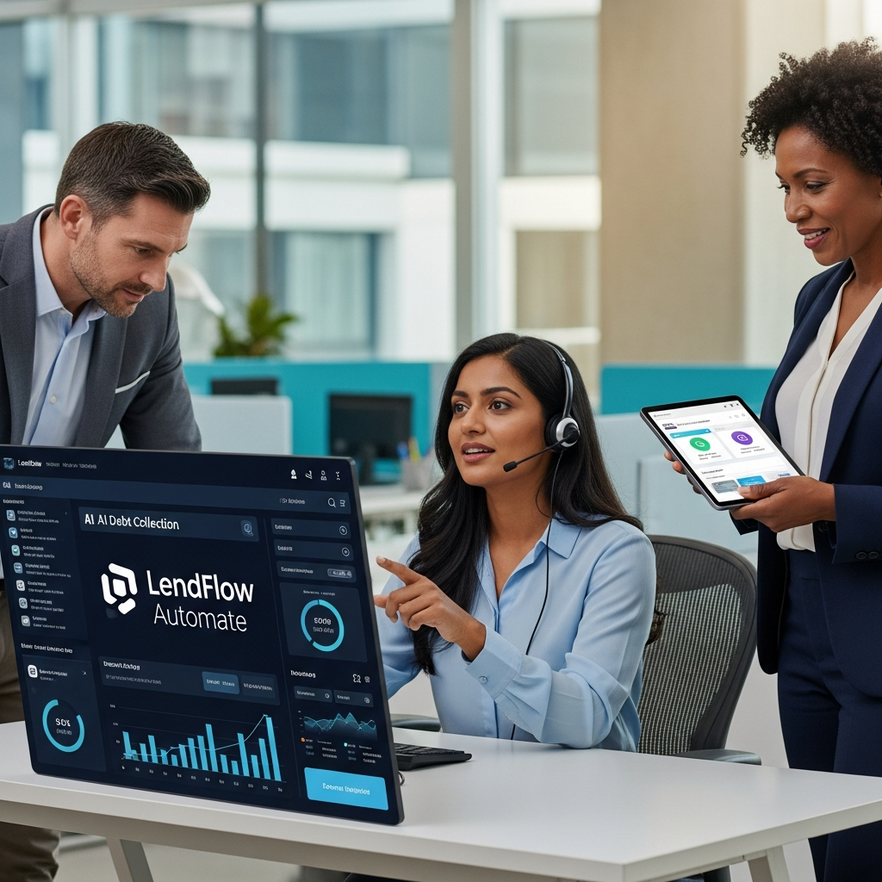
AI agents for loan servicing are intelligent automation tools that manage end-to-end loan servicing workflows, including borrower communication, payment handling, delinquency management, and compliance monitoring. Modern lending teams now use these agents and loan automation platforms to increase recovery rates, reduce manual work, and maintain consistent compliance across large portfolios.
The Evolution of Automated Loan Processing Systems in Modern Lending
The evolution of automated loan processing systems in modern lending is the shift from manual review to AI-driven loan processing automation that evaluates applications and manages servicing at scale. Financial technology has completely changed how lenders manage their portfolios, a trend detailed in reports on financial technology and the future of finance. By 2023, around 73% of financial institutions reported using some form of AI in their lending operations. This adoption reflects the measurable benefits that automated loan processing and loan servicing automation deliver in daily workflows, a topic explored in depth by industry reports on AI adoption in financial services. The journey from paper files to digital intelligence happened faster than most predicted. Just five years ago, loan officers spent hours reviewing applications manually. Today, an automated loan processing system evaluates thousands of applications in minutes, often as part of a broader loan processing automation or loan automation strategy. This speed matters when borrowers expect instant decisions on everything from car loans to mortgages, and when lenders look to leading providers such as Lendflow’s AI suite to streamline embedded lending and servicing.
From Manual to Automated: The Shift in Loan Processing Automation
From manual to automated, the shift in loan processing automation is the replacement of slow human review with automated loan processing workflows that reduce decision times from days to minutes. The differences between old and new methods are striking:
- Traditional manual processes take days while automated loan processing completes tasks in minutes
- Key drivers behind consumer loan automation adoption include cost reduction and accuracy improvements
- Modern lendflow ai agents for loan servicing reduce operational costs by up to 60% when used as part of broader underwriting and servicing automation, according to case studies shared by Lendflow customers using Lendflow Automate and AI agents for communication and document processing
- Integration challenges disappear with proper API connections and staff training
Core Components of Modern Loan Servicing Automation
The core components of modern loan servicing automation are AI agents, automated decisioning, document intelligence, and integrated borrower communication that maintain accurate records across the servicing lifecycle. Modern systems handle much more than simple data entry. Document verification happens instantly through optical character recognition and validation algorithms. These platforms make servicing and collections decisions based on hundreds of data points simultaneously and can plug into an automated loan origination or automated loan processing system for end-to-end coverage. Compliance monitoring runs continuously in the background. Every interaction gets logged and checked against current regulations automatically. This protects both lenders and borrowers from costly mistakes, with robust AI-driven compliance solutions like Lendflow Automate providing centralized audit trails and configurable policy checks across loan automation workflows.
Voice AI Collections: The Game-Changer for Debt Recovery Software
Voice AI collections is the game-changer for debt recovery software because AI voice agents handle inbound and outbound calls, automate reminders, and support borrowers 24/7 with consistent, compliant conversations. Voice technology transforms collections from confrontational to conversational. Modern Voice AI collections systems sound remarkably human, creating comfortable interactions that encourage payment. Borrowers respond better to friendly reminders than aggressive demands, and lenders using Lendflow Voice AI agents report higher completion of loan applications and servicing tasks, demonstrating the power of AI-powered debt collection automation.
Why Voice AI Outperforms Traditional Debt Collection Automation
Why Voice AI outperforms traditional debt collection automation is that AI agents provide natural, personalized conversations at scale while following compliance rules consistently across every call. The advantages become clear when you compare results:
- Natural conversation abilities that adapt to each borrower's situation
- Round the clock availability means connecting with borrowers at convenient times
- Emotional intelligence helps navigate sensitive financial discussions respectfully
- Scalability allows handling thousands of accounts without adding staff
These systems can handle up to 10,000 simultaneous collection calls with consistent messaging. No human team could match this capacity while maintaining quality. Each conversation follows compliance rules perfectly while adjusting tone based on borrower responses. Lendflow’s Voice AI agent, as an example, integrates with CRM systems and writes all interactions back to servicing records, which supports end-to-end loan servicing automation and loan processing automation.
Implementing AI in Debt Collection for Maximum Impact
Implementing AI in debt collection for maximum impact means starting with high-volume account types, training AI agents on proven scripts, and tracking clear performance metrics from day one. Success with AI in debt collection requires thoughtful implementation. Start by identifying your highest volume account types. Train the system on successful past conversations from your best collectors. Monitor key metrics from day one. Track contact rates, promise to pay conversions, and actual payment receipts. Many organizations see measurable improvement within weeks when they implement AI agents alongside an automated loan processing system or broader loan automation stack, then continue optimization for several months. Regular updates keep the system learning and improving its approach, and leading provider platforms such as Lendflow Automate offer workflow builders and analytics to refine agent performance.
Industry-Specific Applications: Financial Services Collections and Beyond
Industry-specific applications for financial services collections and beyond use specialized AI agents and loan automation workflows to address different regulatory and communication requirements. Every industry faces unique challenges when collecting overdue payments. Financial services collections require sophisticated approaches that balance regulatory compliance with customer relationships. Banks and credit unions using specialized AI systems report recovery improvements of around 30–35% within six to twelve months when they deploy tailored AI collections and servicing automation. The technology adapts to specific industry requirements seamlessly. A medical practice needs different collection strategies than a utility company. Modern platforms recognize these differences and adjust their approach accordingly, and Lendflow positions its AI agent toolkit to support multiple product types and industry-specific workflows, including embedded lending and servicing.
Healthcare Debt Collection AI: Unique Challenges and Solutions
Healthcare debt collection AI addresses unique challenges and solutions by embedding HIPAA compliance, gentle communication strategies, and insurance checks into every patient interaction. Medical billing creates particularly complex collection scenarios. Healthcare debt collection AI must navigate privacy laws while maintaining patient trust. The most effective systems address several critical areas:
- HIPAA compliance built into every patient interaction
- Gentle communication approaches for vulnerable populations
- Automatic insurance verification before initiating collections
- Flexible payment plan options based on patient circumstances
Healthcare providers using these systems report significantly fewer complaints while collecting more revenue, with some implementations documenting complaint reductions near 50% and revenue improvements near 30% over several quarters when AI-powered workflows are used consistently. Patients appreciate respectful treatment during difficult financial times. The AI remembers previous conversations and adjusts its approach based on payment history, functioning similarly to how Lendflow’s AI agents track borrower context across communication channels.
Cross-Border Challenges: Best Providers for Cross-Border Loan Servicing AI Agents
Cross-border challenges and the best providers for cross-border loan servicing AI agents focus on multilingual support, local regulation awareness, and currency handling to keep global servicing compliant and efficient. International lending brings additional complexity to collections. The best providers for cross-border loan servicing AI agents handle multiple languages fluently. They understand cultural differences in financial discussions across countries.
- Support for over 40 languages with native pronunciation
- Automatic compliance checking for each country's regulations
- Smart scheduling that respects international time zones
Currency conversion happens automatically during payment discussions. The system knows local banking holidays and adjusts collection timing accordingly. This global capability helps international lenders maintain consistent recovery rates across all markets, and aligns with how leading provider platforms for loan servicing automation and loan processing automation integrate localization rules into their AI agents.
Compliance and Performance: Achieving 99.9% FDCPA Compliance AI
Compliance and performance focused on achieving 99.9% FDCPA compliance AI rely on real-time monitoring, standardized scripts, and automated alerts to minimize violations. Companies using AI-powered compliance monitoring reduce violations by up to 80–85% in documented implementations when they enforce consistent rules in every interaction. This dramatic improvement comes from consistent application of rules across every interaction. Adherence to the federal Fair Debt Collection Practices Act (FDCPA) is paramount, and FDCPA compliance AI never forgets regulations or makes emotional decisions that lead to violations. The technology monitors every word spoken during collections calls. Real-time analysis flags potential issues before they become violations. Supervisors receive instant alerts if conversations drift toward problematic territory. AI-driven compliance monitoring like that available in Lendflow Automate helps lenders maintain reliable audit trails across servicing and collection workflows.
Building FDCPA-Compliant AI Lending Solutions
Building FDCPA-compliant AI lending solutions requires embedding regulatory logic into AI agents, workflows, and documentation from the initial design stage. Creating compliant AI lending solutions requires careful attention to regulatory details. Success comes from building compliance into the system's foundation rather than adding it later. Key elements include:
- Automated compliance checkpoints throughout each conversation
- Real-time monitoring with immediate correction capabilities
- Complete documentation for every borrower interaction
- Regular model updates reflecting new regulatory requirements
These systems create detailed audit trails automatically. Every decision gets logged with supporting data. When regulators request information, lenders provide comprehensive reports within hours instead of weeks. Lendflow’s AI-powered lending and servicing operations platform emphasizes centralized logs and reporting, which support both compliance reviews and performance optimization across loan automation workflows, aligning with the need for maintaining operational resilience and managing risks in a dynamic financial landscape, as highlighted by regulatory bodies.
Measuring Success: How to Increase Collection Rates
Measuring success and learning how to increase collection rates requires establishing baselines, running A/B tests, and tracking multiple performance metrics over time. Organizations looking to increase collection rates need clear metrics and consistent measurement. The most successful implementations track multiple performance indicators simultaneously. Promise-to-pay rates often improve significantly within the first month of AI deployment when AI agents are used in structured workflows. A/B testing reveals which conversation approaches work best for different customer segments. Young borrowers might respond better to text confirmations while older customers prefer voice interactions. The system learns these preferences and adjusts automatically, and tools like Lendflow’s Voice AI and AI-powered communications are designed to route borrowers through preferred channels for higher engagement. Customer satisfaction scores often rise alongside collection rates. Borrowers appreciate convenient scheduling and respectful treatment. Many actually thank the AI agent for helping them resolve their debt situation, and lenders see the benefit in reduced complaint rates and more predictable recovery performance.
Implementing Lendflow AI Lending Automation Borrower Communication Features
Implementing lendflow ai lending automation borrower communication features means deploying AI agents across voice, SMS, chat, and email to keep borrowers engaged and moving through loan origination and servicing steps. Modern lendflow ai lending automation borrower communication features integrate smoothly with existing systems. Seamless integration with existing lending platforms typically takes weeks rather than months. Organizations see immediate improvements in borrower engagement and payment rates when they connect these tools to loan processing automation and automated loan origination workflows. The communication features adapt to borrower preferences automatically. Some customers prefer morning calls while others respond better to evening contact. The system remembers these preferences and schedules accordingly, helping lenders act as a leading provider of ai agents for loan servicing automation in their own markets by offering consistent, responsive communication.
Key Integration Points for Seamless Deployment
Key integration points for seamless deployment include CRM compatibility, secure data migration, and training so that staff can use AI agents effectively. Successful deployment requires attention to technical and human factors. The technology must connect with current systems while staff learns new workflows. Critical integration areas include:
- CRM compatibility through standard API connections
- Secure data migration preserving historical information
- Comprehensive staff training covering new capabilities
- Phased rollout starting with pilot programs
Most organizations complete full integration within 90 days. The phased approach allows teams to adapt gradually while maintaining normal operations. Early wins build confidence and momentum for broader deployment. Lendflow Automate, as part of the lendflow master category ai agents loan servicing ecosystem, is designed to plug into existing platforms through modular APIs and workflow builders.
Maximizing ROI from Your AI Investment
Maximizing ROI from your AI investment depends on clear success metrics, continuous optimization, and expanding automation into additional loan servicing and origination use cases. Return on investment typically appears within the first quarter. Direct cost savings come from reduced staffing needs and higher collection rates. Indirect benefits include better compliance records and improved customer relationships. Organizations should expect 3x to 5x ROI within the first year in mature AI deployments that combine automated loan processing, consumer loan automation, and AI-driven collections and servicing, based on reported performance from leading lenders and fintechs adopting AI agent platforms. This calculation includes both increased collections and operational savings. Many companies reinvest these savings into customer service and expand their use of loan automation across underwriting, servicing, and cross-border portfolios.
Frequently Asked Questions
Q1: How quickly can organizations see results after implementing automated loan processing systems?
Organizations can see results after implementing automated loan processing systems within 30 to 60 days when they connect AI agents to core lending workflows. Most companies see meaningful improvements within 30 to 60 days of implementing automated loan processing. Early indicators include higher contact rates and more payment promises in the first two weeks. Full ROI typically appears by the end of the first quarter with collection rates improving steadily, especially when automated loan processing is combined with AI-driven loan servicing automation and borrower communication.
Q2: What makes voice AI more effective than traditional automated collection calls?
Voice AI is more effective than traditional automated collection calls because Voice AI collections sound natural, recognize intent, and adjust tone based on borrower responses while maintaining compliance. Voice AI collections sound natural and adapt conversations based on borrower responses, unlike robotic automated calls. The technology recognizes emotional cues and adjusts tone appropriately, leading to higher engagement rates, with some implementations reporting improvements of around 40% in engagement and promise-to-pay rates over legacy dialer approaches. Borrowers feel heard and respected, making them more willing to discuss payment options.
Q3: How does AI ensure compliance while handling sensitive financial services collections?
AI ensures compliance while handling sensitive financial services collections by monitoring every interaction, enforcing predefined rules, and recording complete audit trails. FDCPA compliance AI monitors every word during calls and flags potential violations instantly. The system maintains complete audit trails and updates automatically when regulations change. Built in compliance rules prevent agents from calling outside permitted hours or using prohibited language. Platforms such as Lendflow Automate combine AI agents, logging, and rule-based workflows to help lenders maintain consistent compliance across loan servicing automation and debt collection automation.
Q4: Can AI lending solutions integrate with existing loan servicing platforms?
AI lending solutions can integrate with existing loan servicing platforms by using APIs, webhooks, and standardized data models to exchange information securely. Yes, modern AI lending solutions connect through standard APIs with most CRM and loan servicing systems. Integration typically completes within 30 days without disrupting current operations for well-planned projects. The technology works alongside existing platforms, enhancing rather than replacing current infrastructure, and many lenders use Lendflow Automate and Voice AI agents as a layer on top of existing cores for loan processing automation and loan servicing automation.
Q5: What industries benefit most from healthcare debt collection AI and similar specialized solutions?
Industries that benefit most from healthcare debt collection AI and similar specialized solutions include healthcare, financial services, and utilities that manage high volumes of sensitive accounts. Medical practices, hospitals, banks, credit unions, and utility companies see the strongest results from specialized debt collection automation. Each industry version includes specific compliance requirements and communication strategies. Healthcare organizations particularly benefit from HIPAA compliant systems that protect patient privacy while improving recovery rates, while financial institutions benefit from automated loan processing systems, consumer loan automation, and AI agents tailored to their regulatory frameworks.