Best Ai-Enabled Patient Triage Software 2025: Buyer'S Guide
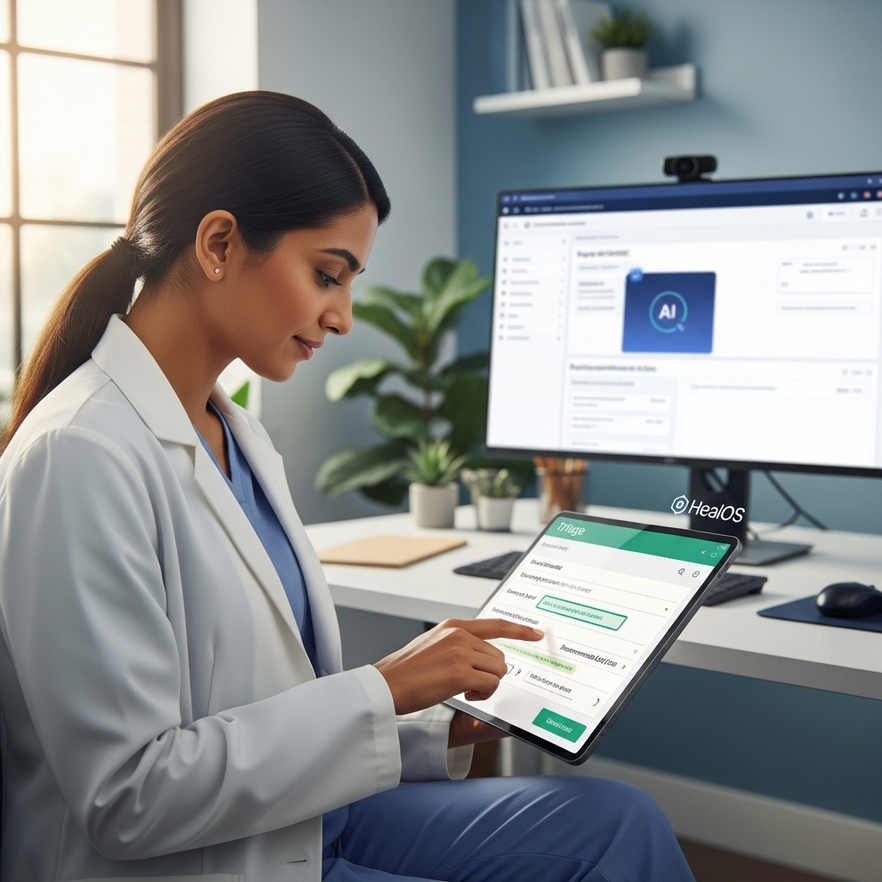
Best ai-enabled patient triage software 2025 consists of AI platforms that prioritize patients by analyzing symptoms and vital signs in real time to optimize emergency and primary care workflows. Healthcare organizations adopt the best ai-enabled patient triage software 2025 to reduce documentation time by 70% and address physician burnout, with 83% of providers implementing AI solutions as of 2025.
Understanding AI-Powered Healthcare Platforms in Modern Medical Practice
What Makes AI Healthcare Technology Essential
Modern platforms use specialized agents AI to provide operational efficiency for medical practices. According to 2025 industry data, 76% of healthcare organizations use AI solutions to improve patient outcomes and reduce administrative overhead.
AI healthcare technology enhances diagnostic accuracy rates to 98% for general medical terminology. Clinical staff reduce documentation burdens, which allows more time for direct patient care.
AI healthcare technology delivers data-driven insights for treatment decisions. AI platforms process medical information in real time and support clinical judgment with evidence-based recommendations.
Core Components of Effective AI Healthcare Systems
Successful AI healthcare platforms share several essential characteristics that determine their effectiveness in clinical settings:
- Real-time data processing capabilities that analyze patient information instantaneously
- EMR integration functionality connecting seamlessly with existing healthcare systems
- Regulatory compliance features ensuring HIPAA, PHIPS, and PIPEDA adherence
- User-friendly interfaces designed specifically for healthcare providers and clinical workflows
Advanced platforms also incorporate medical coding automation and specialty specific templates. These features support various documentation formats including SOAP notes, HPI assessments, and MSE evaluations.
AI SOAP Note Generator tools in these platforms automate structured note creation with 95% accuracy for specialty terminology.
Top AI-Enabled Patient Triage Software Solutions
Leading Diagnostic AI Platforms
Several specialized platforms excel in specific areas of patient assessment and diagnosis. Qure.ai focuses on radiology and medical imaging analysis, providing rapid interpretation of scans and diagnostic images. Viz.ai specializes in stroke detection algorithms, helping emergency departments identify critical cases requiring immediate intervention. Their platform integrates with existing hospital workflows to expedite treatment decisions.
Aidoc offers comprehensive emergency department workflow optimization. Their AI technology prioritizes cases based on urgency and clinical indicators, helping medical staff allocate resources effectively. Platforms like these represent the best ai-enabled patient triage software 2025 for emergency settings.
AI Medical Documentation and Workflow Solutions
HealOS stands out as a comprehensive clinical documentation automation platform designed for modern healthcare practices. The system offers 98% accuracy for general medical terms and 95% accuracy for specialty terminology. Healthcare providers using HealOS report saving over 8 hours weekly on documentation tasks.
The platform reduces charting time by 70%, allowing physicians to focus more attention on patient care activities. AI Scribe and HIPAA Compliant AI Scribe features in HealOS ensure secure, automated note generation. The system integrates with major EMR platforms including Kalix, Cerbo, Jane App, Healthie, Accuro, and Oscar Pro. Studies show that practices implementing AI documentation tools experience productivity increases of up to 65%.
AI Scribe for Epic compatibility supports real-time data exchange in Epic systems.
Specialized Triage and Decision Support Tools
Modern AI triage systems address specific clinical environments and specialties:
- Emergency department AI triage systems that prioritize patients based on symptom severity
- Primary care workflow optimization platforms supporting routine consultations and follow ups
- Telehealth integrated AI solutions enabling remote patient assessment and documentation
These specialized tools often include automated medical coding features and real time transcription capabilities. They support both in person consultations and virtual healthcare delivery models. AI progress note taker and AI Meeting Note taker for Doctors functionalities enhance these tools for consultations.
Key Features to Evaluate in AI Healthcare Platforms
Accuracy and Reliability Standards
Medical terminology recognition rates serve as the primary benchmark for evaluating AI healthcare platforms. Leading systems achieve accuracy rates exceeding 95% for general medical terms, with specialized platforms reaching up to 98% accuracy.
Specialty specific accuracy metrics vary by clinical discipline. Emergency medicine and radiology applications typically demonstrate higher precision rates due to standardized terminology usage. Error reduction capabilities directly impact patient safety and clinical outcomes. The most effective platforms include built in verification systems that flag potential inconsistencies in medical documentation. HIPAA Compliant AI Scribe standards ensure reliability in these systems.
Integration and Compatibility Requirements
- EMR/EHR system compatibility with major platforms including Epic, Cerner, and specialty systems
- API connectivity options supporting real time data exchange
- Workflow integration supporting both telehealth and in person consultations
- Automated medical coding features reducing administrative overhead
Compliance and Security Considerations
HIPAA, PHIPS, and PIPEDA compliance represents the minimum standard for healthcare AI platforms. Leading solutions implement bank level encryption protocols protecting sensitive patient information.
Data encryption standards must meet healthcare industry requirements for both data transmission and storage. Patient privacy protection measures include access controls and audit logging capabilities. AI Scribe for Epic solutions meet these standards for Epic users.
Implementation Strategies for AI Healthcare Technology
Planning Your AI Healthcare Platform Adoption
Assessing current workflow inefficiencies helps identify the most beneficial AI applications for your practice. Focus on documentation tasks that consume the most physician time and contribute to burnout.
Staff training programs should begin weeks before system deployment. Change management strategies must address clinical workflow modifications and technology adoption concerns. Best ai-enabled patient triage software 2025 requires such planning for optimal adoption.
Measuring ROI and Healthcare Efficiency Gains
Healthcare organizations typically see positive ROI within 6 to 12 months of AI platform implementation. Practices report average productivity increases of 65% following successful deployment.
Time savings quantification shows physicians save 8+ hours weekly through automated documentation. Patient satisfaction improvements result from increased face to face interaction time during consultations. JAMA research confirms physicians save 3.2 hours per day with AI Scribe tools.
Overcoming Common Implementation Challenges
- Staff resistance often stems from concerns about technology replacing human judgment
- Technical integration hurdles require dedicated IT support during transition periods
- Cost benefit analysis should include both direct savings and productivity improvements
AI Regulatory Framework and Future Outlook
Current Regulatory Landscape
FDA guidelines for AI medical devices focus on safety and efficacy standards for diagnostic applications. Classification requirements depend on the level of clinical decision making support provided.
The World Health Organization's AI health policies emphasize transparency and accountability in healthcare applications. Compliance requirements vary by intended use and risk classification levels.
Emerging Trends in AI Healthcare Technology
Generative AI applications are expanding beyond basic transcription to include comprehensive clinical documentation automation. Advanced patient triage algorithms now incorporate predictive analytics for early intervention opportunities. AI progress note taker trends drive this expansion.
Enhanced EMR integration capabilities allow seamless data flow between AI platforms and existing healthcare systems. Real time clinical decision support continues advancing with improved accuracy rates.
Future Developments and Industry Predictions
- Accuracy improvements expected to reach 99% for general medical terminology within two years
- New specialty specific applications targeting cardiology, oncology, and mental health documentation
- Regulatory framework evolution focusing on standardized certification processes for healthcare AI
U.S. AI in medical scribing market projects growth from USD 397.05 million in 2024 to USD 2,955.72 million by 2033 at 25.09% CAGR.
Frequently Asked Questions
Q1: What is the most accurate AI-enabled patient triage software available in 2025?
The most accurate AI-enabled patient triage software available in 2025 achieves 98% accuracy for general medical terms. Platforms like HealOS reach 95% for specialty terminology, with EMR integration and specialty features matching practice needs. Best ai-enabled patient triage software 2025 prioritizes these metrics.
Q2: How much can AI healthcare platforms reduce physician burnout?
AI healthcare platforms reduce physician burnout by saving over 8 hours weekly on charting tasks. Some systems cut documentation time by 70%, allowing focus on patient care.
Q3: What EMR systems integrate with AI healthcare platforms?
AI healthcare platforms integrate with EMR systems including Kalix, Cerbo, Jane App, Healthie, Accuro, Oscar Pro, and Nookal. Verify real-time data exchange and automated coding compatibility. AI Scribe for Epic supports Epic integration.
Q4: Are AI healthcare platforms compliant with medical privacy regulations?
AI healthcare platforms comply with HIPAA, PHIPS, and PIPEDA using bank-level encryption. Solutions include data encryption, access controls, and audit logging. HIPAA Compliant AI Scribe verifies this standard.
Q5: What is the typical cost structure for AI healthcare software?
AI healthcare software cost structures range from free tiers to monthly subscriptions starting at $49. Practices achieve ROI in 6-12 months with 65% efficiency gains.