Sales Call Analysis: The Complete Guide To Improving Your Sales Performance
What is Sales Call Analysis?
Sales call analysis is the systematic process of reviewing, evaluating, and extracting insights from sales conversations to improve performance, refine messaging, and increase conversion rates. In today's competitive business landscape, understanding what works and what doesn't during sales interactions is critical for revenue growth and team development.
Whether you're a sales manager looking to coach your team or a sales representative aiming to improve your own performance, sales call analysis provides the data-driven insights necessary to make informed decisions. This comprehensive guide will walk you through everything you need to know about analyzing sales calls effectively, from methodologies and tools to best practices and actionable strategies.
Why Sales Call Analysis Matters for Your Business
The importance of sales call analysis cannot be overstated in modern sales organizations. According to industry research, companies that regularly analyze their sales calls see up to 30% improvement in conversion rates and significant increases in deal sizes.
Key Benefits of Sales Call Analysis
- Performance Visibility: Gain clear insights into individual and team performance metrics that drive results
- Coaching Opportunities: Identify specific areas where sales representatives need improvement and provide targeted coaching
- Best Practice Identification: Discover what top performers do differently and replicate their success across the team
- Customer Insights: Understand customer objections, pain points, and buying triggers more deeply
- Process Optimization: Refine your sales process based on real conversation data rather than assumptions
- Compliance and Quality Assurance: Ensure your team follows legal requirements and company policies during sales interactions
The Revenue Impact
Organizations that implement systematic sales call analysis typically experience measurable improvements in their bottom line. By identifying patterns in successful calls versus unsuccessful ones, sales teams can adjust their approach, messaging, and tactics to align with what actually works in the field. This data-driven approach removes guesswork and replaces it with actionable intelligence.
Key Components of Effective Sales Call Analysis
To conduct thorough sales call analysis, you need to understand the essential elements that make up a comprehensive evaluation framework. These components work together to provide a complete picture of sales performance.
Talk-to-Listen Ratio
One of the most critical metrics in sales call analysis is the talk-to-listen ratio. Research consistently shows that top-performing sales representatives maintain a ratio where they listen approximately 60-70% of the time and talk only 30-40%. This allows prospects to express their needs, concerns, and objections fully, which enables more targeted and effective responses.
Question Quality and Frequency
Analyzing the types and frequency of questions asked during sales calls reveals much about the effectiveness of discovery processes. Effective sales professionals ask open-ended questions that encourage prospects to share detailed information about their challenges, goals, and decision-making criteria. During sales call analysis, pay attention to whether representatives are asking strategic questions or simply going through a checklist.
Objection Handling
How sales representatives respond to objections often determines whether a deal moves forward or stalls. Sales call analysis should examine how quickly objections are addressed, whether responses are confident and well-prepared, and if the representative successfully reframes concerns into opportunities. Common objections around pricing, timing, and competition require specific strategies that can be refined through systematic analysis.
Call Structure and Flow
Successful sales calls typically follow a recognizable structure: opening and rapport building, discovery and needs assessment, solution presentation, objection handling, and closing. Analyzing whether your team follows this structure and where they deviate can highlight training opportunities and process improvements.
Methods and Approaches for Sales Call Analysis
There are several methodologies organizations can employ when conducting sales call analysis. The best approach often combines multiple methods to create a comprehensive evaluation system.
Manual Call Review
Manual review involves sales managers or coaches listening to recorded calls and taking detailed notes. While time-intensive, this method provides nuanced insights that automated systems might miss. Managers can assess tone, enthusiasm, rapport-building effectiveness, and other subtle factors that impact sales success. For best results, create a standardized scorecard that evaluates consistent criteria across all reviewed calls.
AI-Powered Conversation Intelligence
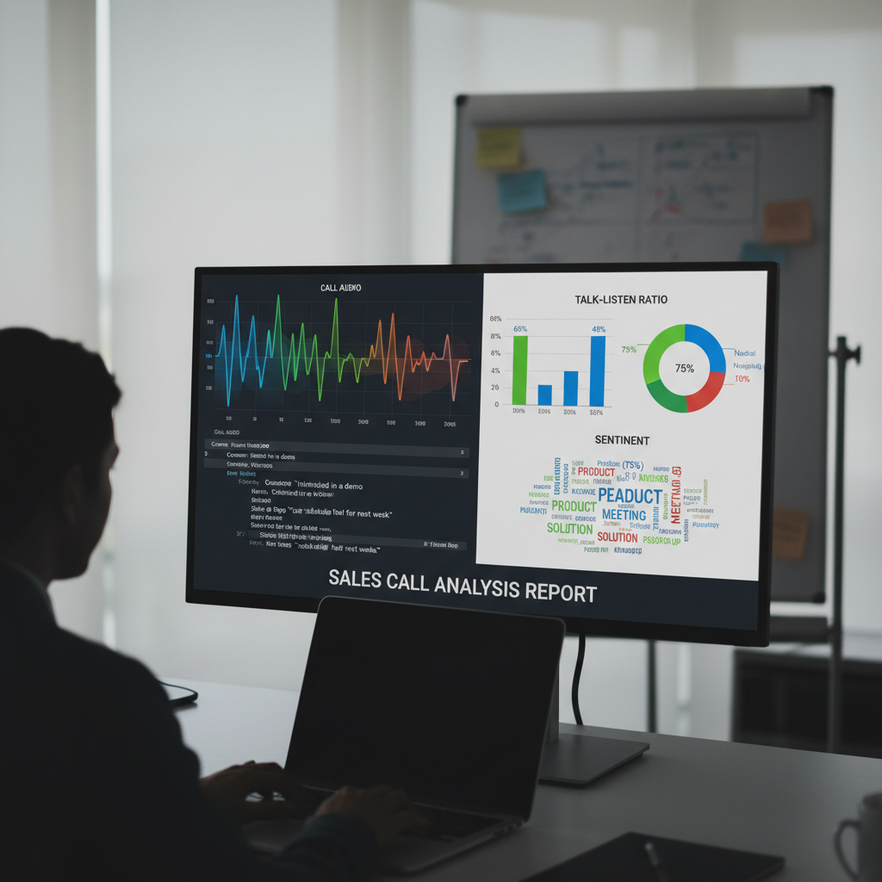
Modern conversation intelligence platforms use artificial intelligence and natural language processing to analyze sales calls at scale. These tools can automatically transcribe calls, identify keywords and topics, measure talk time ratios, detect sentiment, and flag important moments like competitor mentions or objections. This technology makes sales call analysis more scalable and provides quantitative data that complements qualitative human review.
Peer Review Sessions
Creating a culture where sales representatives review each other's calls fosters collaborative learning and accountability. Peer review sessions allow team members to learn from both successes and mistakes in a supportive environment. This approach works particularly well when combined with tools like salesroleplay.app, which allows teams to practice and refine their skills in a risk-free environment before real customer interactions.
Self-Assessment and Reflection
Encouraging sales representatives to review their own calls promotes self-awareness and continuous improvement. When salespeople listen to their own conversations, they often identify areas for improvement that weren't apparent during the live interaction. Provide a self-assessment framework that guides representatives to focus on specific elements like opening statements, question quality, and closing techniques.
Essential Metrics and KPIs for Sales Call Analysis
Effective sales call analysis requires tracking specific metrics that correlate with sales success. Here are the most important key performance indicators to monitor:
Conversation Metrics
- Average Call Duration: Track how long successful calls last compared to unsuccessful ones
- Talk-to-Listen Ratio: Monitor how much time reps spend talking versus listening
- Monologue Duration: Identify when representatives talk for extended periods without customer engagement
- Questions Asked: Count the number and types of questions posed during discovery
- Interruptions: Track how often representatives interrupt prospects or vice versa
Outcome Metrics
- Conversion Rate: Percentage of calls that result in next steps or closed deals
- Average Deal Size: Revenue generated from calls with specific characteristics
- Sales Cycle Length: How call quality impacts the time from first contact to close
- Follow-up Success Rate: How effectively calls lead to scheduled next steps
Quality Metrics
- Objection Resolution Rate: How successfully representatives address concerns
- Script Adherence: Whether key messages and value propositions are communicated
- Sentiment Score: The emotional tone of both the representative and the prospect
- Competitor Mentions: How often competitors come up and how they're addressed
Best Practices for Implementing Sales Call Analysis
Successfully implementing sales call analysis in your organization requires more than just tools and metrics. Follow these best practices to maximize the impact of your analysis program.
Establish Baseline Performance
Before making changes, establish baseline metrics for your team's current performance. This provides a reference point for measuring improvement and helps you identify which changes have the greatest impact. Analyze a representative sample of calls from different team members, call types, and stages of the sales cycle.
Create Standardized Scorecards
Develop detailed scorecards that evaluate consistent criteria across all calls. Your scorecard should include both quantitative metrics (talk time, question count) and qualitative assessments (rapport building, objection handling quality). Standardization ensures fair evaluation and makes it easier to identify trends across the team.
Focus on Coaching, Not Criticism
Frame sales call analysis as a coaching and development opportunity rather than a punitive measure. When reviewing calls with team members, lead with positive observations before addressing areas for improvement. Use specific examples from their calls to illustrate both strengths and opportunities, and collaborate on action plans for skill development.
Analyze Calls Regularly and Consistently
Sales call analysis should be an ongoing process, not a one-time event. Establish a regular cadence for reviewing calls weekly or bi-weekly is ideal for most teams. Consistency helps identify trends over time and demonstrates the organization's commitment to continuous improvement.
Share Insights Across the Team
When you identify effective techniques or common mistakes during analysis, share these insights with the entire team. Create a knowledge base of best practices, successful call recordings, and coaching resources that all team members can access. This accelerates learning and helps newer representatives ramp up more quickly.
Combine Analysis with Practice
Analysis alone isn't enough representatives need opportunities to practice new skills in a safe environment. Platforms like salesroleplay.app provide AI-powered roleplay scenarios where sales professionals can rehearse their pitch, practice objection handling, and refine their approach based on insights gained from call analysis. This combination of analysis and practice creates a powerful continuous improvement cycle.
Common Challenges in Sales Call Analysis and How to Overcome Them
Implementing a comprehensive sales call analysis program comes with challenges. Here's how to address the most common obstacles:
Time Constraints
Challenge: Sales managers often lack the time to review calls thoroughly while managing other responsibilities.
Solution: Leverage AI-powered conversation intelligence tools to pre-screen calls and flag those requiring human review. Focus manual analysis on high-value opportunities, deals that were lost, and calls from representatives who need the most coaching.
Resistance from Sales Teams
Challenge: Sales representatives may view call analysis as micromanagement or feel uncomfortable being recorded.
Solution: Communicate the developmental purpose of call analysis clearly and involve the team in creating evaluation criteria. Share how analysis has helped other team members improve their performance and earn more commission. Celebrate wins that result from implementing insights gained through analysis.
Inconsistent Analysis
Challenge: Different managers may evaluate calls using different criteria, leading to inconsistent feedback.
Solution: Create detailed scorecards with specific criteria and examples. Train all managers on evaluation standards and periodically review sample calls together to calibrate ratings and ensure consistency.
Lack of Actionable Insights
Challenge: Teams collect data but struggle to translate it into concrete improvement actions.
Solution: For every identified issue, create a specific action plan with training resources, practice scenarios, and follow-up checkpoints. Focus on one or two improvement areas at a time rather than overwhelming representatives with too much feedback.
Technology and Tools for Sales Call Analysis
The right technology stack can make sales call analysis more efficient and impactful. Here's what to consider when selecting tools:
Conversation Intelligence Platforms
These platforms automatically record, transcribe, and analyze sales calls using AI. They provide insights on talk time, keywords, sentiment, and more. Leading solutions integrate with your CRM to connect call data with deal outcomes. When evaluating options, look for platforms that offer customizable scorecards, coaching workflows, and team analytics dashboards.
CRM Integration
Your sales call analysis tools should integrate seamlessly with your customer relationship management system. This connection allows you to correlate call characteristics with deal outcomes, track which representatives handle specific account types, and ensure that insights from call analysis inform your overall sales strategy.
Call Recording Solutions
Reliable call recording is the foundation of any analysis program. Whether you use VoIP systems, video conferencing platforms, or dedicated recording tools, ensure your solution captures high-quality audio, stores recordings securely, and complies with legal requirements in your jurisdiction.
Practice and Roleplay Platforms
Tools like salesroleplay.app complement your analysis efforts by providing a space where representatives can practice implementing feedback. These platforms use AI to simulate realistic sales scenarios, allowing team members to refine their skills without the pressure of live customer interactions. The best practice platforms offer scenario libraries, performance feedback, and integration with your existing sales methodology.
Implementing a Sales Call Analysis Program: Step-by-Step
Ready to implement sales call analysis in your organization? Follow this step-by-step approach:
Step 1: Define Your Objectives
Start by clarifying what you want to achieve with sales call analysis. Are you primarily focused on improving conversion rates, reducing sales cycle length, improving onboarding for new hires, or ensuring compliance? Clear objectives guide your choice of metrics, tools, and processes.
Step 2: Select Your Technology Stack
Based on your objectives and budget, choose the tools that will support your analysis program. At minimum, you'll need reliable call recording and a framework for evaluation. Consider whether AI-powered analysis tools would provide sufficient ROI based on your team size and call volume.
Step 3: Develop Evaluation Criteria
Create detailed scorecards that align with your sales methodology and objectives. Involve top performers and frontline managers in developing these criteria to ensure they're relevant and comprehensive. Include both quantitative metrics and qualitative assessments.
Step 4: Train Your Team
Before launching your program, train both managers and representatives on the purpose, process, and benefits of sales call analysis. Explain how calls will be selected for review, how feedback will be delivered, and how the program supports career development. Address privacy concerns and legal compliance openly.
Step 5: Start Small and Scale
Begin with a pilot program involving a small group of managers and representatives. Use their feedback to refine your processes, scorecards, and coaching approaches before rolling out organization-wide. This iterative approach helps you identify and address issues early.
Step 6: Establish Coaching Cadences
Create a regular schedule for call reviews and coaching sessions. Weekly one-on-ones that include call review are ideal for most teams. Structure these sessions to include listening to call segments together, discussing what went well, identifying improvement opportunities, and creating action plans.
Step 7: Measure and Iterate
Continuously measure the impact of your sales call analysis program on key performance indicators like conversion rates, deal size, and sales cycle length. Regularly solicit feedback from participants and refine your approach based on what's working and what isn't.
Future Trends in Sales Call Analysis
The field of sales call analysis continues to evolve rapidly with advancing technology. Here are trends shaping the future:
Real-Time Assistance
Emerging technologies provide real-time guidance during live sales calls. These systems use AI to analyze conversations as they happen and surface relevant information, suggest responses to objections, or alert representatives when they're talking too much. This real-time feedback loop accelerates learning and improves in-the-moment performance.
Predictive Analytics
Advanced analytics platforms are beginning to predict deal outcomes based on early call characteristics. By analyzing patterns across thousands of calls, these systems can identify which early indicators correlate with closed deals, allowing representatives and managers to focus resources on the most promising opportunities.
Emotion AI
Sentiment analysis is becoming more sophisticated, with systems that can detect subtle emotional cues in both voice tone and word choice. This technology helps representatives understand how prospects are truly feeling and adjust their approach accordingly. It also provides managers with insights into customer satisfaction and engagement levels.
Integrated Learning Ecosystems
The future of sales development involves tightly integrated systems that connect call analysis, learning management, coaching, and practice. Representatives will receive personalized learning paths based on their specific strengths and weaknesses identified through call analysis, with immediate opportunities to practice new skills through platforms like salesroleplay.app.
Frequently Asked Questions About Sales Call Analysis
How often should sales calls be analyzed?
The ideal frequency for sales call analysis depends on your team size and resources, but most effective programs review at least 2-4 calls per representative per month. High-performing teams may analyze more, especially for new hires or representatives struggling with specific skills. The key is consistency regular analysis is more valuable than sporadic deep dives.
What are the legal considerations for recording and analyzing sales calls?
Legal requirements vary by jurisdiction. In the United States, some states require two-party consent for call recording while others require only one-party consent. Always consult with legal counsel to ensure compliance with applicable laws. Best practice is to notify all parties that calls are being recorded and obtain consent, regardless of legal minimums. Document your compliance procedures and train representatives on proper protocols.
How can sales call analysis improve team performance?
Sales call analysis improves performance by providing objective data on what works and what doesn't, enabling targeted coaching, identifying training needs, and helping representatives understand their strengths and development areas. When combined with regular practice and coaching, analysis can lead to conversion rate improvements of 20-30% or more. The key is using insights to drive specific behavioral changes rather than simply collecting data.
What metrics matter most in sales call analysis?
While every organization should track metrics aligned with their specific goals, the most universally important metrics include talk-to-listen ratio, number and quality of questions asked, objection handling effectiveness, and correlation between call characteristics and deal outcomes. Focus on metrics that drive behavior change rather than vanity metrics that look impressive but don't impact results.
How do I get buy-in from sales representatives who resist call analysis?
Resistance typically stems from fear of criticism or perception of micromanagement. Address this by framing analysis as a development tool rather than evaluation, involving the team in creating evaluation criteria, sharing success stories of how analysis has helped others improve, and focusing coaching conversations on specific growth opportunities rather than general criticism. When representatives see tangible improvements in their performance and commission checks, resistance typically fades.
Conclusion: Turning Insights Into Action
Effective sales call analysis is more than just reviewing recordings it's a systematic approach to understanding what drives sales success and continuously improving performance. By implementing the methodologies, metrics, and best practices outlined in this guide, you can transform your sales organization from one that relies on intuition to one powered by data-driven insights.
Remember that analysis is only valuable when it leads to action. Use the insights you gain to provide targeted coaching, refine your sales process, and create personalized development plans for each team member. Combine analysis with regular practice opportunities through platforms like salesroleplay.app to ensure representatives can implement feedback before their next customer interaction.
The most successful sales organizations view call analysis not as a one-time project but as an ongoing commitment to excellence. Start implementing these strategies today, and you'll soon see measurable improvements in conversion rates, deal sizes, and overall team performance. The insights are in your calls you just need to systematically extract and act on them.