What Is Video Poet? A Guide For Better Hiring
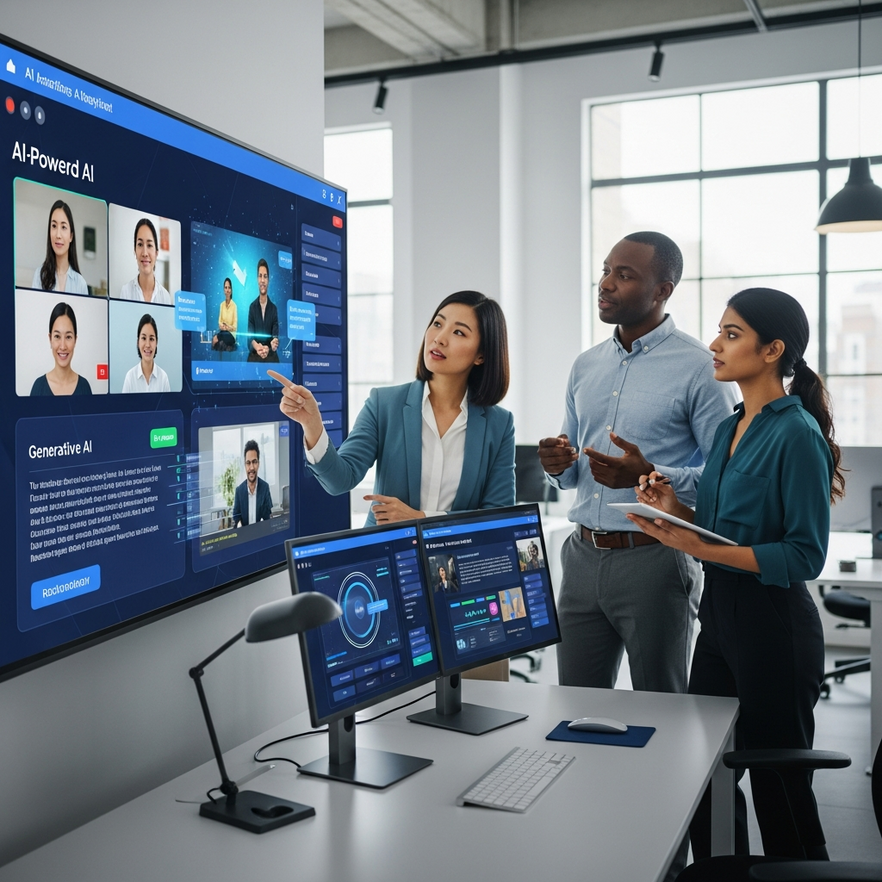
A video poet for smarter candidate assessments is an AI-powered system that generates dynamic visual content from text prompts to create customized interview scenarios, training materials, and skill evaluation environments for recruitment professionals. This technology transforms traditional hiring methods by enabling recruiters to produce engaging, contextual assessment experiences without extensive technical expertise.
Modern recruitment is undergoing rapid transformation as organizations adopt AI-powered solutions to streamline candidate evaluation and reduce hiring timelines. Video poet technology and advanced AI interviewer platforms represent the latest evolution in this shift, offering capabilities that extend far beyond entertainment applications to fundamentally reshape how companies screen, assess, and hire talent. According to recent industry research, organizations implementing AI-powered recruitment tools report reducing time to hire by up to 60% while improving assessment accuracy and candidate experience.
The Rise of AI-Generated Content in Professional Settings
AI-generated content has transitioned from entertainment-focused applications to sophisticated business solutions that enhance recruitment workflows. An AI interviewer now incorporates advanced video generation capabilities, enabling recruiters to create more engaging and effective assessment experiences that adapt to specific job requirements and candidate responses.
Companies report significant improvements in candidate engagement when using visual AI skill assessment software compared to traditional text-based assessments. The technology's ability to generate relevant scenarios and role-playing environments opens new possibilities for evaluating candidate responses in realistic work situations, providing recruiters with behavioral data that predicts job performance more accurately than conventional interviews.
Understanding Video Generation Technology
Video generation technology builds on advanced machine learning models that interpret text prompts and create corresponding visual content. For HR professionals, this means the ability to generate customized interview scenarios, training materials, and assessment environments without extensive technical expertise. The core capabilities include:
- Real-time content creation based on specific job requirements
- Dynamic scenario generation for behavioral assessments
- Automated visual aids for candidate instructions and feedback
Current Applications Beyond Entertainment
Progressive HR departments are already exploring video interview software and visual content generation beyond traditional recruitment advertising. The technology shows particular promise in areas where visual demonstration enhances understanding and engagement.
Smart organizations recognize that AI skill assessment software can incorporate generated content to create more immersive evaluation experiences. This approach helps candidates better understand role expectations while providing recruiters with richer behavioral data. Current professional applications include:
- Interactive onboarding modules with role-specific scenarios
- Training simulations for interview preparation and skill development
- Standardized assessment environments that reduce evaluation bias
Transforming Candidate Screening with Visual AI Tools
The integration of video generation with conversational AI interviewer platforms creates unprecedented opportunities for candidate evaluation. Modern screening processes can now incorporate dynamic visual elements that adapt to specific roles and candidate responses.
Research indicates that video-based assessments provide 40% more accurate predictions of job performance compared to traditional interview methods. This improvement stems from the technology's ability to present candidates with realistic work scenarios and capture nuanced behavioral responses.
Enhanced Video Interview Analysis
Two-way AI interviewer systems enhanced with video generation capabilities create more natural and engaging candidate interactions. The technology enables real-time scenario presentation, allowing candidates to demonstrate problem-solving skills in context rather than through hypothetical questions.
Integration with existing applicant tracking systems ensures that enhanced assessment data flows seamlessly into established recruitment workflows. This compatibility reduces implementation barriers while maximizing the value of existing technology investments. Key enhancements include:
- Automated generation of role-specific assessment scenarios
- Real-time behavioral analysis with visual context consideration
- Standardized evaluation environments that ensure fair candidate comparison
Revolutionizing Skills Assessment
Video-based assessments predict job performance 40% better than traditional methods by capturing behavioral responses in realistic contexts. Real-time scenario generation transforms how recruiters evaluate technical and soft skills.
AI power assessment tools create customized simulations matching exact job requirements, allowing candidates to demonstrate abilities in realistic contexts. Customized assessment environments adapt to different roles and industries. Sales positions might feature customer interaction scenarios, while technical roles include problem-solving challenges. This flexibility ensures every candidate faces relevant evaluation criteria.
Standardized evaluation processes reduce subjective judgment and improve consistency across assessments:
- Automated scoring based on predefined competency frameworks
- Consistent scenario presentation eliminating interviewer variability
- Objective behavioral analysis tracking response patterns and decision-making
- Performance benchmarking against successful employee profiles
AI Interviewer Technology: Beyond Traditional Methods
Addressing Hiring Challenges with Innovation
Modern recruitment faces increasing pressure to identify quality candidates quickly while maintaining fair evaluation standards. AI interviewer software addresses these challenges by automating initial screening without sacrificing assessment quality. Organizations report reducing time to hire by up to 60% through automated screening processes:
- Parallel candidate evaluation eliminates scheduling bottlenecks
- Instant assessment results accelerate decision-making
- Automated shortlisting based on objective performance criteria
- Continuous availability enables global candidate participation
Eliminating unconscious bias remains a critical benefit. Video generation technology creates neutral assessment environments where all candidates face identical scenarios. This standardization helps organizations build more diverse, qualified teams.
Scalable solutions support AI recruiter for high-volume hiring needs:
- Simultaneous assessment of hundreds of candidates
- Consistent quality regardless of recruitment volume
- Automated administrative tasks freeing recruiter time
- Flexible capacity scaling based on hiring demands
The Future of Human-AI Collaboration in Recruitment
Successful implementation focuses on augmenting human capabilities rather than replacing recruiters entirely. Conversational AI interviewer platforms handle routine screening while recruiters focus on relationship building and cultural fit assessment.
Maintaining personal connection requires thoughtful integration of automated and human touchpoints:
- AI handles initial technical screening and logistics
- Recruiters engage qualified candidates for deeper evaluation
- Technology provides data insights supporting human decisions
- Personal interactions focus on culture and team dynamics
Ethical considerations guide responsible deployment:
- Transparent communication about AI usage in recruitment
- Regular auditing for algorithmic bias or discrimination
- Candidate consent and data privacy protection
- Human oversight of all final hiring decisions
Implementation Strategies for HR Professionals
Integration with Existing Recruitment Workflows
Successful adoption requires structured planning and phased implementation. Interview software for recruiting agencies integrates smoothly when organizations follow proven deployment frameworks. Begin with pilot programs testing specific use cases before full rollout:
- Select one department or role type for initial testing
- Measure results against traditional methods baseline
- Gather feedback from recruiters and candidates
- Refine processes based on pilot learnings
Training requirements focus on practical application rather than technical details:
- Platform navigation and basic functionality training
- Best practices for prompt creation and scenario design
- Interpreting AI-generated insights and recommendations
- Maintaining human judgment in automated processes
ROI measurement tracks both quantitative and qualitative improvements:
- Time savings in screening and scheduling activities
- Quality of hire metrics including retention rates
- Candidate satisfaction scores and feedback
- Cost reduction per successful placement
Overcoming Common Implementation Barriers
Budget considerations often delay adoption despite clear long-term benefits. AI interviewer for staffing firms provides measurable returns through efficiency gains and improved placement quality. Organizations typically recover implementation costs within six to twelve months.
Change management strategies ensure smooth transitions:
- Early stakeholder engagement building buy-in
- Clear communication about tool benefits and limitations
- Gradual rollout allowing adjustment periods
- Continuous support addressing user concerns
Compliance requirements vary by jurisdiction but common considerations include:
- EEOC guidelines for fair employment practices
- GDPR compliance for candidate data handling
- Industry-specific regulations affecting assessment methods
- Documentation requirements for audit trails
Video poet technology and advanced AI power assessment tools promise continued evolution in recruitment practices. Organizations embracing these innovations position themselves to attract top talent while building more efficient, equitable hiring processes. The journey toward AI-enhanced recruitment requires careful planning and ethical consideration. However, the potential benefits in efficiency, fairness, and candidate experience make this technological shift essential for competitive talent acquisition.
Frequently Asked Questions
Q1: How does video generation technology improve candidate assessment accuracy compared to traditional interview methods?
Video-based assessments create realistic work scenarios that reveal how candidates actually perform tasks rather than just discussing hypothetical situations. Studies show these assessments predict job performance 40% better because they capture behavioral responses in context, reducing guesswork about candidate capabilities.
Q2: What are the main privacy and ethical considerations when implementing AI-powered interview tools?
Organizations must maintain transparency about AI usage, obtain candidate consent for data collection, and regularly audit systems for algorithmic bias. Human oversight should guide all final hiring decisions, and companies need to comply with employment regulations like EEOC guidelines and data protection laws such as GDPR.
Q3: Can smaller companies benefit from advanced AI interviewer technology, or is it only suitable for large enterprises?
Small companies often see faster returns because AI interviewer software eliminates time-consuming manual screening tasks. Most platforms offer flexible pricing and scalable features, allowing businesses to start small and expand usage as hiring needs grow without requiring large upfront investments.
Q4: How long does it typically take to see measurable improvements in hiring efficiency after implementing AI interview tools?
Most organizations notice immediate time savings in scheduling and screening, with comprehensive efficiency gains appearing within three to six months. Companies typically recover implementation costs within six to twelve months through reduced time to hire and improved candidate quality.
Q5: What training is required for HR teams to effectively use AI-powered recruitment platforms?
Basic platform training usually takes just a few hours, focusing on navigation, scenario creation, and interpreting results. Most providers offer ongoing support and best practice guidance, so recruiters can learn while using the system rather than completing extensive technical training beforehand.